
Tuberculosis Care Among the Orang Rimba of the Sumatran Rainforest in Indonesia
Indigenous Peoples globally have carried a disproportionately high burden of TB for decades. Indonesia, the country with the second-highest TB burden worldwide, is home to
approximately 60 million Indigenous Peoples, yet the health needs of this population remain inadequately addressed.
This inductive thematic content analytic study was part of a larger mixed-methods project aimed at designing culturally responsive TB care among the Orang Rimba in Jambi, Indonesia.
Data were collected through 28 in-depth interviews with Indigenous community members and
external stakeholders, complemented by focus group discussions with Indigenous Community
Health Workers (CHWs) and Community Health Center TB teams. Findings were analyzed
using the Health Equity Implementation Framework to identify factors shaping TB care.
Photos and reflections on the thesis project
Students submitted photos and reflections as part of their thesis research. All the people in the photos gave permission for their photos to be taken and shared.
left:
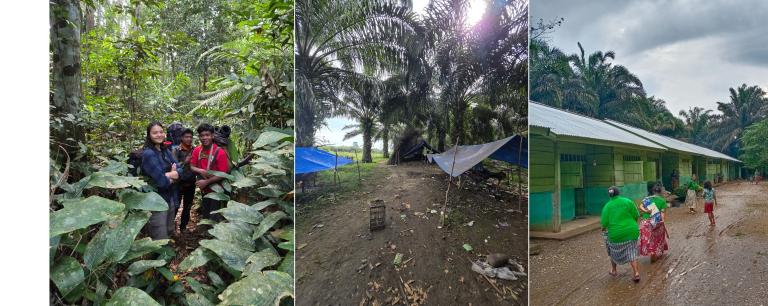
Forest - Bukit Dua Belas National Park: An Indigenous cadre from the Anak Dalam Tribe led us into the forest, carrying a red medical bag to reach his community in its deepest part.
middle:
Palm Oil Plantation: Tarpaulin tents amidst the palm oil plantation, home to the semi-nomadic Anak Dalam Tribe who have lost their ancestral forest.
right:
Resettlement: Indigenous health cadres in resettlements, where the forest-deprived community must adapt to the dominant society’s way of life.
Stories of 3 Worlds
My thesis project focuses on tuberculosis care among the Anak Dalam Tribe, also known as the Orang Rimba, the original inhabitants and guardians of the Sumatran rainforest. Decades of land-use change have diminished their homeland, forcing the Indigenous people to disperse across the small remaining forest inside the national park, palm oil plantations, and resettlement areas.
“We weep, our forest has vanished. We weep, our nest has disappeared. We depended on the forest, but the forest is gone. Today, some lie dead, some are beaten, some are shot. That is the root of the problem. That is the root of the problem.”
Mounting Pressure toward a Transition
Bukit Dua Belas National Park Border
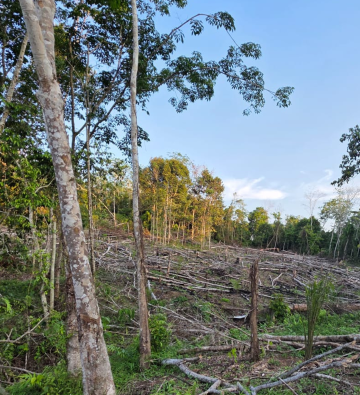
Lands where dying timber lay side by side with trees still standing tall, divided by nothing more than the invisible boundary of a national park. There is no buffer zone. As we crossed that threshold, we stepped into a deforested expanse awaiting transformation into yet another palm oil plantation, directly adjacent to the park.
With each step, the whispered word “transition” seemed to echo through every fractured trunk, and a tangible pressure weighed on us, bearing witness to a profound displacement.
How can the Anak Dalam Tribe—the Orang Rimba, "People of the Forest"—sustain their way of life and their deep-rooted knowledge when over 75% of their forest, their ancestral home, has been converted to plantations? This loss has stripped them of their identity, livelihoods, traditional food sources, and every essential means of survival.
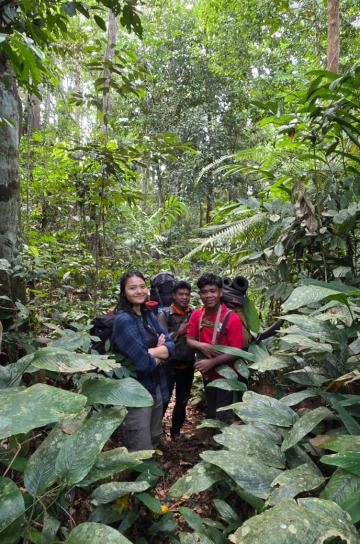
We walked four hours deeper into the forest, where humid air hung thick and moss-muffled footfalls echoed. With every step, my pride in my survival skills peeled away, layer by layer. As we moved further away from my world and into their world, it became harshly clear that I stood no chance of finding my way among hundreds of trees that all looked the same, if not for the guidance of my two trusted native guides, Beconteng and Nengkabau.
This journey stripped me bare, my Harvard credentials, career, and experience meant nothing in that forest. I was vulnerable, and I understood how deeply the Orang Rimba have been stripped of their own mastery.
I had spent more than two years guiding the Anak Dalam (Orang Rimba) through the healthcare system, Sometimes, I felt more knowledgeable than them, such a foolish, prideful thought. But those days in the forest opened my eyes. Dispossessed of their ancestral land, they were uprooted into my world. Here, in their world, I was the newborn, helpless, unfamiliar.
The Orang Rimba once fed and healed with ecological mastery passed down through generations. Now, they’re robbed of homeland, identity, and livelihood by rampant forest clearing and palm oil expansion. Struggling to live in a new world was a brief research experience for me, it is the daily reality of the Orang Rimba: constant upheaval, suffering, and relentless struggle, because their forest has been sacrificed for our greedy world.
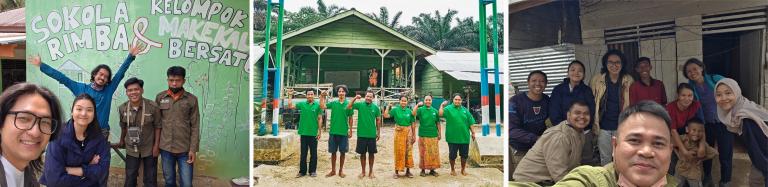
Sokola Rimba - Kelompok Makekal Bersatu (KMB) - Kubu Mandiri - ZeroTB
These are my local partners: my trusted Research Assistant, Sokola Rimba’s staff - an NGO that has accompanied Orang Rimba for more than 20 years in contextual education, KMB’s Indigenous cadres - Indigenous youth that actively advocate for Orang Rimba’s wellbeing, Kubu Mandiri - The Anak Dalam community where I had been working with for more than 2 years, initiating TB care among the community, community assisstants from various religious group, and Zero TB - an Indonesian NGO focusing in TB active case finding that want to start a collaboration to do community-based TB screening and diagnosis among the Anak Dalam Tribe.
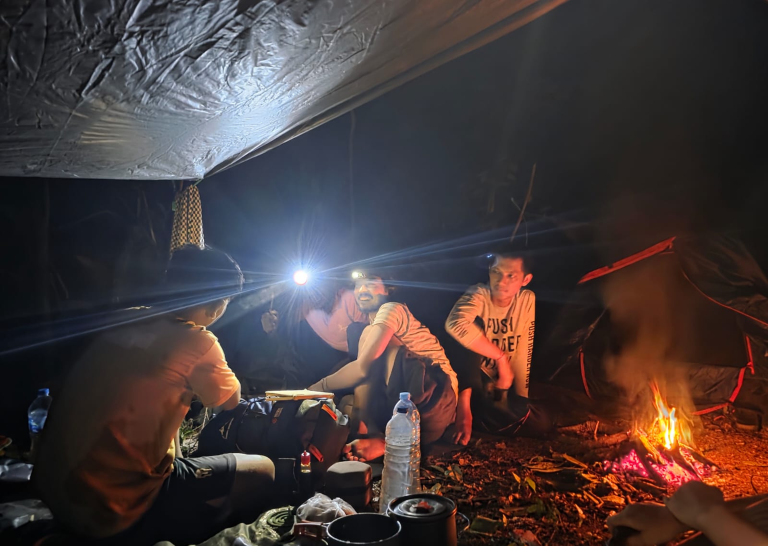
The Gemuruh sub-community of the Orang Rimba consists of only seven families. Reaching them requires more than four hours of walking through the forest. Orang Rimba communities living deep in the forest hold strongly to their traditional culture. One form of Indigenous knowledge I deeply admire is “Besesandingon”, a set of rules and practices to protect communities from infectious diseases. One of these rules is that outsiders should not build their camps too close to the community, to avoid bringing in disease. The photo on the left shows our camp, built a 30-minute walk away from the community. This reminds me of the “social distancing” and “self-isolation” measures that wider society only came to know during the COVID-19 pandemic. They knew it first, through their long-standing knowledge that has protected them for generations.
On our first night, a woman and her son from the Gemuruh sub-community came down to our camp. “The tiger came,” she warned. I felt a bit scared, but what I heard next mesmerized me: “Our men will follow him.” That night, one of our native guides joined the Gemuruh men in tracking the tiger, because it usually does not finish its prey right away. The community could then collect the “leftovers” of deer or other animals. For them, the tiger is not merely a threat but also part of their subsistence system.
“Won’t the tiger come back to look for its prey?”
I asked. My native guides laughed and replied, “Of course he will, that’s why you can’t follow us this time.”
In that moment, I witnessed the strength of the Orang Rimba: survival, danger, and respect for the forest are inseparably woven into their lives. Their solid Indigenous ecological knowledge allows them to strategically and safely make decisions, turning what outsiders might only fear into opportunity.
Meet The Cough Lord
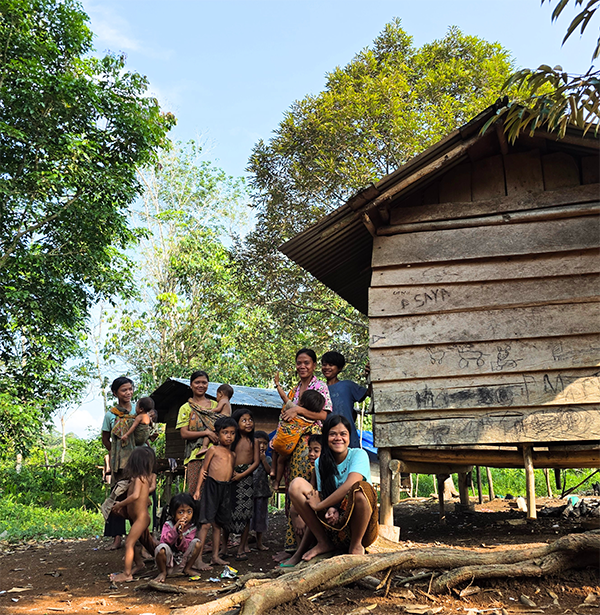
These are members of the Sakonapuh sub-community, who live near the forest’s edge, one of the Orang Rimba/Anak Dalam Tribe communities where I conducted freelisting. From them, I first learned about Tuan Dihingoiko (in their language, Tuan means “Lord” or “Master”), their local term for “cough,” literally “Lord of Cough.” Out of fear of illness, they avoid saying “cough” directly, believing that doing so would invite it. Instead, they use this honorific as a form of respect to ward off the sickness.
They also believe that a cough may be caused if someone meets Tuan Dihingoiko in a dream or if his shadow touches them. This was the first time I had directly encountered a disease personified, a phenomenon found in many Indigenous knowledge systems worldwide. It confirmed for me that freelisting is the right approach for this study, and I hope to explore further how such beliefs can guide the most contextual ways of sharing tuberculosis and health education among these communities.
Anemia, Bushmeat, and Deforestation
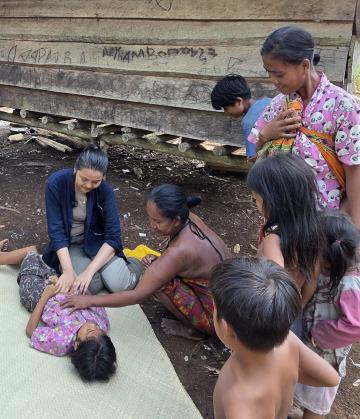
Along our journey in the forest, people often asked to have their illnesses checked after my guides explained that my research assistant and I are doctors. Here, I examined a girl from the Sakonapuh sub-community who showed signs of anemia. Many women and children displayed pale conjunctiva and skin. I recalled a study reporting anemia among women of reproductive age in another Anak Dalam community, though no similar research has been conducted here.
This week, I accompanied a boy from Sakonapuh referred to the District Public Hospital for severe anemia (Hb 4.3). Although he received a prompt blood transfusion, no further workup, such as blood morphology, iron studies, or diagnostic testing, was done to identify the underlying cause.
Chris Golden’s planetary health research in Madagascar has shown links between anemia in Indigenous children, deforestation, and reduced access to wildlife and bushmeat. The Orang Rimba likely face similar conditions: massive deforestation has depleted wildlife, limiting their traditional protein sources. Beyond ecological loss, I witnessed women from one community walk together to borrow rice from a local rice boss outside the national park. In return, they were bound to sell all jungle products exclusively to him, often at unfairly low prices and under heavy interest.
Despite a historically diverse Indigenous food system that never relied solely on rice, modern pressures and exploitative land systems have imposed a form of “gastrocolonialism,” deepening food insecurity and worsening health inequities among the Orang Rimba.
The Loudest Belly Laughers
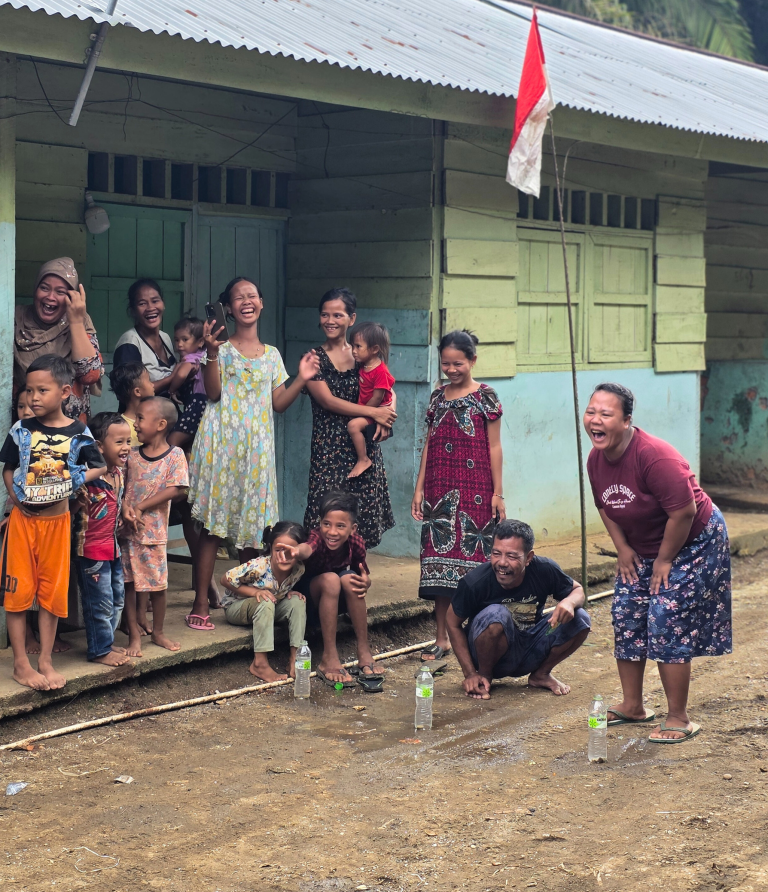
As we conducted several in-depth interviews, one characteristic kept coming up when we asked about the strengths of the Anak Dalam community: their sense of humor. They are expressive people who love to laugh, often at the simplest and silliest things. Whether it’s walking through the thick forest with sore legs, dealing with a motorcycle breaking down for the third time on a muddy road, making language mistakes during health cadre training, or playing silly games to celebrate Independence Day, laughter is always present.
These are people caught in layers of structural violence that threaten their future generations, yet they are also the people with the loudest, most joyful belly laughter. Oh, I love them.