Mobile Main Navigation

  • About
    • Mission and Core Values
    • Our Premises
    • Department History
      • 150 Years of Social Medicine
        • GHSM 150th Celebration Events
          • 150 Years of Social Medicine at Harvard
          • The Arc of Social Medicine from Context to Practice
          • Climate Justice and Degrowth
        • Articles about our 150th
    • In Memoriam of Paul Farmer
      • Paul Farmer Memorial and Symposium
    • Our Leadership
    • Our Partners
    • News
    • Cummings Foundation Professor
    • Contact Us
  • Education
    • Courses
      • Global Health and Social Medicine
      • Medical Ethics
      • Global Health Delivery
      • Global Health (Faculty of Arts and Sciences)
      • Medical Anthropology
      • History of Medicine
      • Sociology in Medicine
    • Educational Opportunities
    • Fellowships
      • Dr. Mario Pagenel Fellowship Global Mental Health Delivery
      • Fellowship in Bioethics
      • Paul Farmer Global Surgery Research Fellowship
      • Postdoctoral Fellows Office
      • Previous Fellowship Programs
    • Master of Science in Media, Medicine, and Health
      • Overview
      • Curriculum
      • Admissions
      • Faculty
      • Students and Alumni
      • Capstones
      • FAQs
    • Media and Medicine Certificate Program
      • Overview
      • Curriculum
      • Admissions
      • Faculty
      • Alumni
      • FAQs
    • Public Lectures
    • Scholars in Medicine
    • Arts and Humanities Initiative
      • Overview
      • Sponsorship
      • Donate
    • Master of Medical Sciences in Global Health Delivery
      • Overview
      • Curriculum
      • Thesis
      • Admissions
      • Who Should Apply
      • Faculty
  • Programs
    • Economics
      • Program Objectives
      • Featured Initiatives
      • Partnerships
    • Family Care for the Elderly
      • Collaborative Research
      • Program Objectives
      • Featured Initiatives
      • Partnerships
    • Palliative Care
      • Program Objectives
      • Featured Initiatives
      • Leadership
      • Affiliates
    • Surgery
      • Program Objectives
      • Featured Initiatives
      • PGSSC Leadership
        • Faculty Labs
      • Partnerships
      • Affiliates
  • Research
    • Center for Bioethics
    • Center for Global Health Delivery
    • Cultural Studies of Biomedicine
    • Global Health Delivery
    • Global Health Partnership Early Child Development Working Group
    • History of Medicine
    • Human Resources for Health
    • Infectious Disease
    • Medical Anthropology
    • Mental Health
  • Events
    • Department Seminars
      • Department Seminar Videos - 2023
      • Department Seminar Videos - 2024
    • Friday Morning Seminars
  • People

Mobile Utility Navigation

  • Harvard Medical School
Menu

Utility Navigation

  • Harvard Medical School
Search

Main navigation

  • About
    • Mission and Core Values
    • Our Premises
    • Department History
    • In Memoriam of Paul Farmer
    • Our Leadership
    • Our Partners
    • News
    • Cummings Foundation Professor
    • Contact Us
  • Education
    • Courses
    • Educational Opportunities
    • Fellowships
    • Master of Science in Media, Medicine, and Health
    • Media and Medicine Certificate Program
    • Public Lectures
    • Scholars in Medicine
    • Arts and Humanities Initiative
    • Master of Medical Sciences in Global Health Delivery
  • Programs
    • Economics
    • Family Care for the Elderly
    • Palliative Care
    • Surgery
  • Research
    • Center for Bioethics
    • Center for Global Health Delivery
    • Cultural Studies of Biomedicine
    • Global Health Delivery
    • Global Health Partnership Early Child Development Working Group
    • History of Medicine
    • Human Resources for Health
    • Infectious Disease
    • Medical Anthropology
    • Mental Health
  • Events
    • Department Seminars
    • Friday Morning Seminars
  • People
People by a wall
MMSc-GHD | Class of 2026

Student Thesis

Learn more about what the Global Health Delivery program has to offer:

Return to MMSc-GHD home page
Request more info

Cinta Nurindah Sari

Evaluation of a Community-Based Nutrition Program using the Positive Deviance/Hearth (PD/Hearth) Approach: A Biosocial Analysis of Determinants Influencing Effectiveness in Sambas and Malang, Indonesia
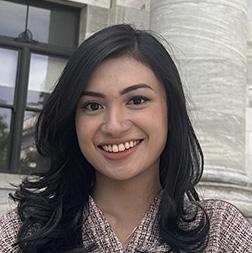
Cinta Nurindah Sari MMSc-GHD 2026

Undernutrition remains a critical challenge in Indonesia, especially among children under two. This study evaluates the effectiveness of a community-based nutrition program in Indonesia, Pos Gizi DASHAT, which uses the Positive Deviance/Hearth approach in one of the implementing districts. This study focuses on both biological outcomes and social determinants and employs a convergent mixed-methods design. Quantitative analysis will compare recovery outcomes between enrolled and not enrolled children. Qualitative interviews and focus group discussions will explore perceived barriers and facilitators to program enrollment and effectiveness from caregivers and program implementers.

Individuals in the photographs consented to having their photographs shown. 

SITE 1: MALANG REGENCY

Sari_gubuk

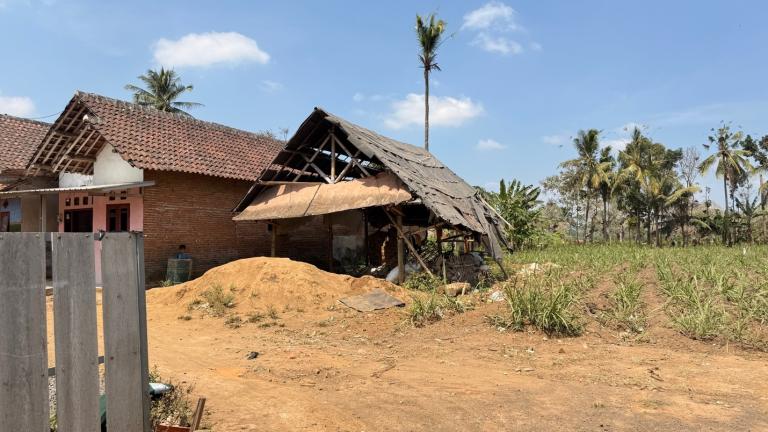
The Gubuk and the Field

Under the midday sun stands an old gubuk (field hut) with a sagging, rusted tin roof beside a neat row of young green crops. A newer pink-brick house nearby accentuates the gubuk’s broken wooden frame, a contrast between past and present. I imagined it once served as shelter for farmers or storage for harvest tools. Now it’s mostly collapsed, the structure holding on just enough to suggest past use. As I snap a photo, a child peeks out curiously from behind the house, reminding me that life carries on around this relic. It reminded me that daily life continues - kids still play here, mothers still work nearby - even as some parts of the village are slowly left behind. Not nostalgia exactly, but a kind of pause. Noticing what persists and what’s quietly disappearing.

How is this related to my project?
This was the location of one of my caregiver interviews. 

What I’ve learned:
You don’t need toys or manicured parks for kids to play. But what’s harder to see is whether they’re eating well, gaining weight, or hitting growth milestones. It made me think about what’s visible (and what isn’t) when we talk about nutrition and health.

Indonesia dirt road, buildings and trees

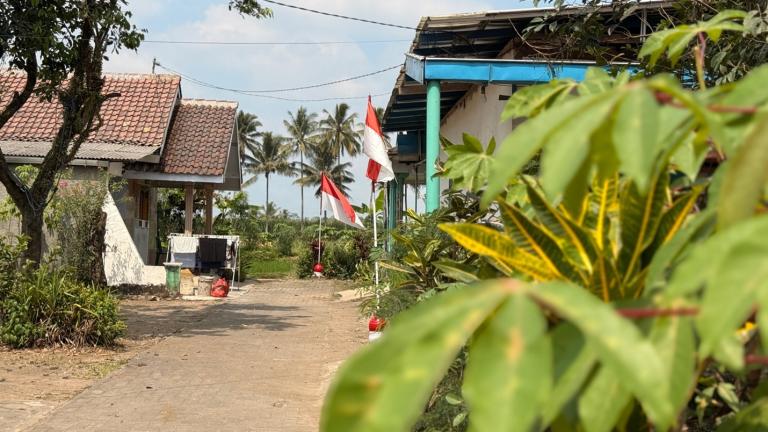
Red and White in the Breeze

A narrow village lane stretches ahead, flanked by modest homes and coconut palms swaying in the distance. Bright red-and-white Indonesian flags flutter proudly at each gate, their colors vivid against the clear sky. It’s the week of Independence Day, and the whole kampung (village) is dressed up in these national colors. Walking down this lane, I sense the strong community spirit. Even in this peaceful afternoon lull, the shared celebration of nationhood is palpable in the warm breeze.

How is this related to my project?
This is one of the neighborhoods where caregivers in the Pos Gizi DASHAT program live.

What I’ve learned:
Even when homes are unfinished or income is unstable, people here make the effort to raise their flag. It reminded me that dignity doesn’t depend on wealth. Sometimes it’s small acts like these that speak loudest.

Sari Narrow Lane

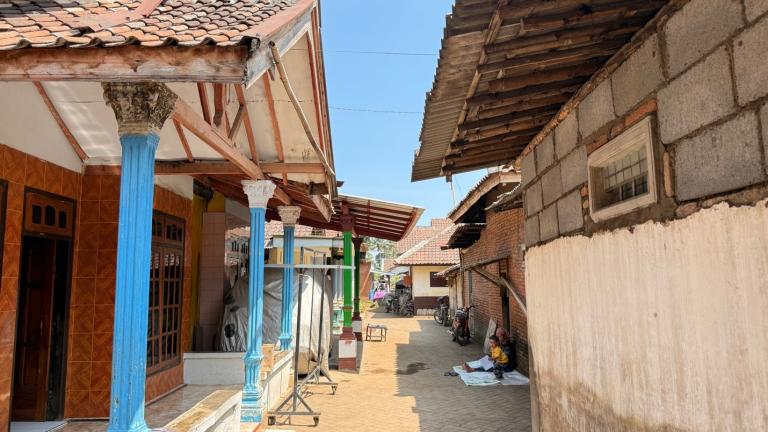
The Narrow Lane

I step into a narrow alleyway lined with brightly painted house fronts - turquoise, green, and blue pillars standing shoulder to shoulder. The midday sun filters through, illuminating a tidy patchwork of courtyards. An elderly woman sits on a mat in the shade to my right with a child. She greets me with a friendly nod as I pass. In this confined space, I feel the closeness of community life. Each door opens almost onto the next and every greeting carries warmth. A short walk here shows how everyday commerce, socializing, and trust weave tightly together in the fabric of alleyway life.

How is this related to my project?
This is the everyday setting for one of the mothers I interviewed. It’s also how information spreads - through casual chats, house visits, and informal support systems.

What I’ve learned:
The neighborhood is its own health system. It might not be on any official org chart but this is where advice is shared, kids are fed, and problems get solved. The Posyandu is part of it - but so are these small alleys.

Sari local office

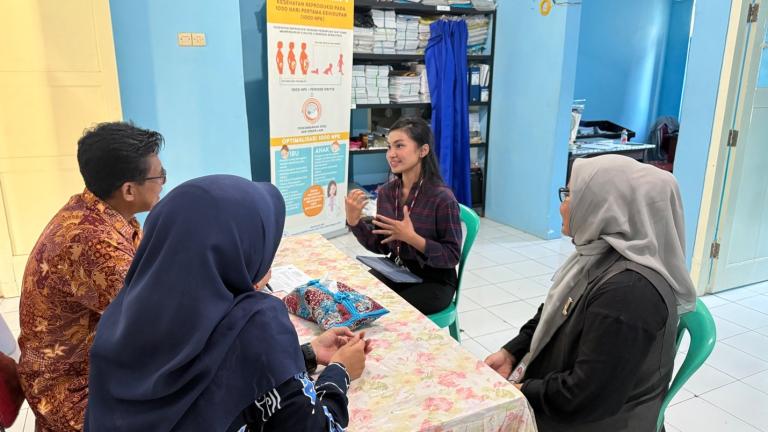
At the Local Office

Inside the local National Population and Family Planning Board office, with its walls painted a bright aqua blue, my local research assistant and I sat across a desk from two staff members. They are gathered with me just beside a poster celebrating the “First 1000 Days of Life” campaign. As we chatted, they shared their experiences educating young mothers about nutrition and infant care. I noted the passion in their voices as they described challenges in their area. In this moment, I’m a student of their local wisdom. I left the place inspired by their dedication and reminded that effective healthcare is as much about understanding community realities as it is about policies on posters.

How is this related to my project?
They are some of the key actors in how the program is carried out - handling the data, mentoring kaders, and navigating policy shifts.

What I’ve learned:
Numbers on a report are never the whole story. These conversations made me realize how much is shaped by people on the ground - what they’re able to do, what they believe in, and how much trust they have from the community.

Sari hospitality interview

Hospitality in the Field

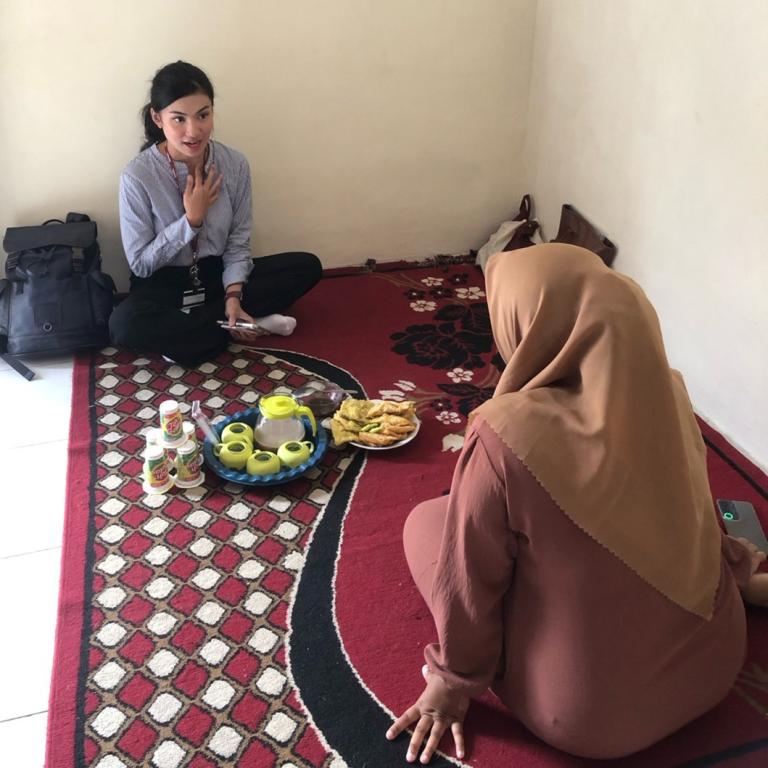
Late afternoon light slants through the doorway as I sat cross-legged on a woven carpet in her living room. In front of us, a low tray holds a teapot, two tiny cups of sweet tea, and a plate of fried cassava and tempe bites she prepared as a welcome. My host is a mother from the community. With each sip of tea, our conversation grew more comfortable, drifting from structured interview into personal storytelling. Her act of hospitality dissolved the formalities and made me feel less like an outsider and more like an invited guest. As we laughed quietly about her toddler’s antics and exchanged perspectives on daily life, I realized that these intimate human moments are where true understanding blooms.

How is this related to my project?
This was part of a qualitative interview with caregivers.

What I’ve learned:
Mothers here don’t have much but they still offer whatever they can. Hosting is not about showing off but it’s about respect. And for me, these moments have been the most grounding part of the work.

SITE 1: MALANG REGENCY

Sari flags

Hands Up, Flags Out

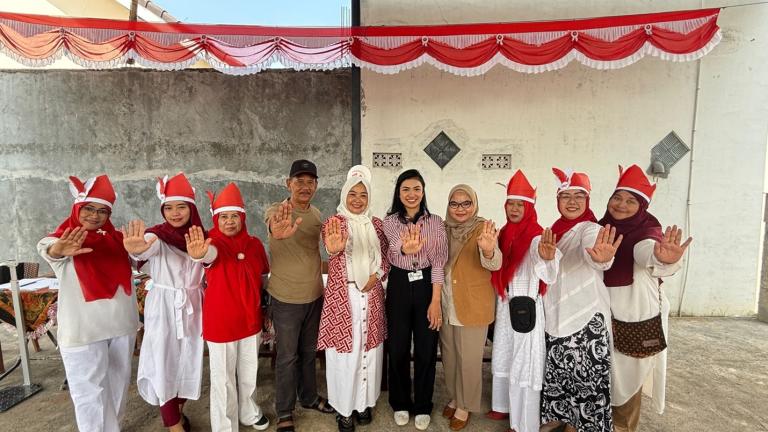
In one of the villages in Malang, I joined a monthly Posyandu session that happened to fall a week before the national Independence Day. Everyone was in red and white. Some of the kaders even wore handmade paper hats which were proudly crafted for the occasion. We posed for a photo together; me, the village head, the village-level stunting reduction team representative, and the local health kaders. Our hands were raised with palms open - a gesture they said symbolized "stop stunting"

How is this related to my project?
This was when I met local stakeholders and observed how health programming (posyandu) is embedded within village life. 

What I’ve learned:

It’s easy to talk about “community-based programs” but what that often means is that the burden of implementation is shifted to women (kaders) without formal recognition/compensation. Most of the work (organizing, reminding caregivers, setting things up) fell on the kaders. Women who aren’t paid but keep the whole thing moving. The session ran smoothly because they showed up and filled in the gaps, not because of formal systems. It made me reflect on how much child health in communities depends on women’s unpaid labor and social ties, and how rarely that’s acknowledged in the way programs are designed/evaluated.

Sari What it takes to get there

What It Takes to Get There

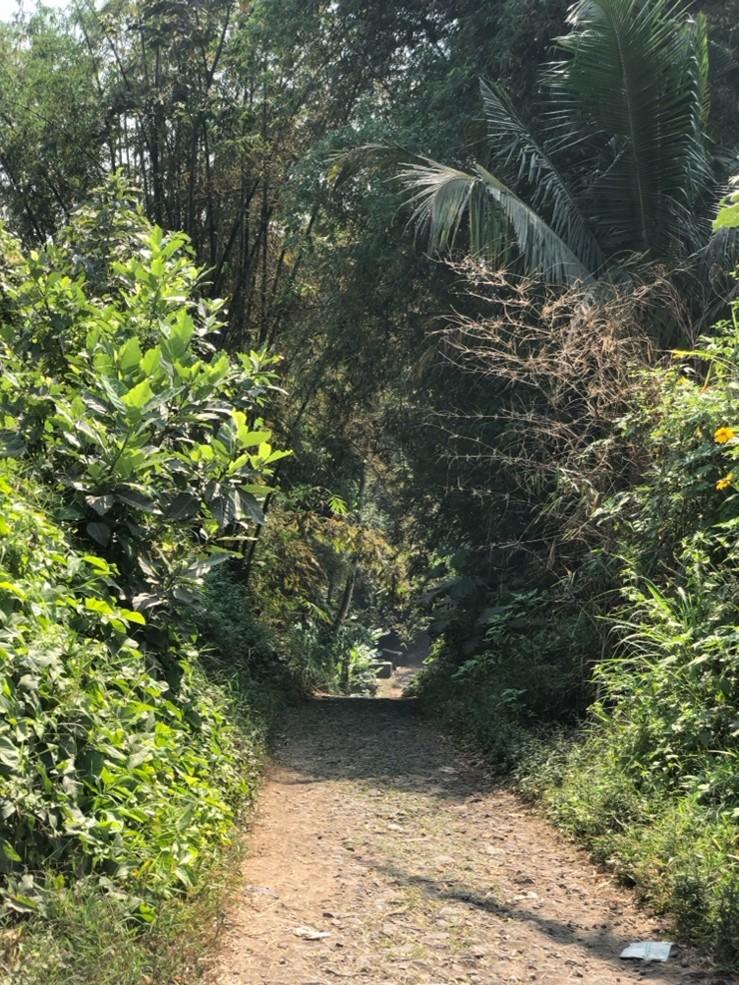
The road is uneven, flanked by thick vegetation and trees. This photo was taken along one of the narrow paths I traveled to visit the home of a Pos Gizi DASHAT participant.

How is this related to my project?
Access route to a village in Malang.

What I’ve learned:

Access ≠ kilometers.These paths shape participation. Who brings their child to Posyandu and who stays home is structured by geography, fatigue, and care burdens that programs often overlook, not just a matter of caregivers’ will. Behind each coverage number is a caregiver who carried the weight (literally and figuratively) and sometimes she’s not accounted for in how we design/evaluate these programs.

Sari team

From the frontlines

These are moments with some of the people who run things behind the scenes. They spoke openly about what it means to supervise a program - navigating guidelines, limited resources, and the everyday realities of communities.

Why this moment matters to my research

They are the bridge between policy and practice. They take what’s written on paper and make it work in places where life rarely follows the script. And when it doesn’t work, they adjust.

What I’m taking away

Health programs don’t succeed because they’re perfectly designed - they succeed because people keep them going. People troubleshoot. They translate. They care. And no logframe or dashboard captures that.

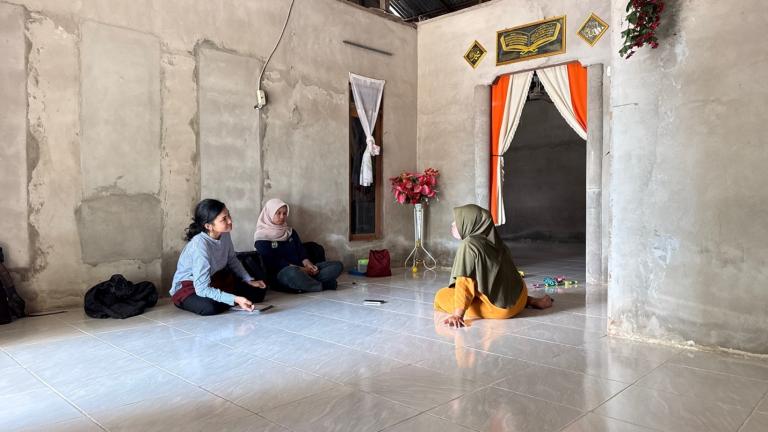
Three women sit in a room taking

Beyond the questionnaire

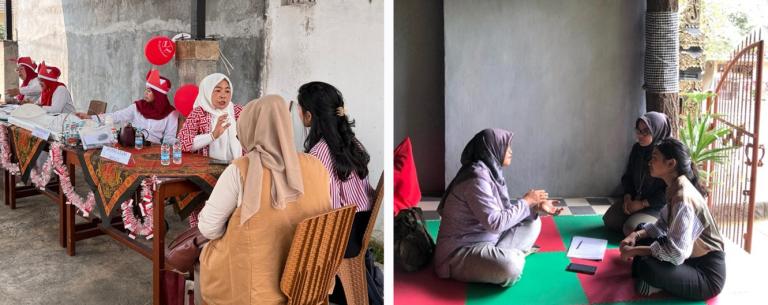
We sat with caregivers who hadn’t joined the program. These moments reminded us that there are many reasons behind someone’s absence, and they don’t always get recorded.

Why this moment matters to my research

Numbers alone don’t explain why some caregivers are never reached by programs designed for them. But sitting there, we learned about the everyday negotiations that shape a mother’s choices.

What I’m taking away

Not everyone sees programs the way we design them. And not joining doesn’t mean they’re passive. Listening to her reminded me that care looks different in every home. And we won’t understand it unless we sit down and ask.

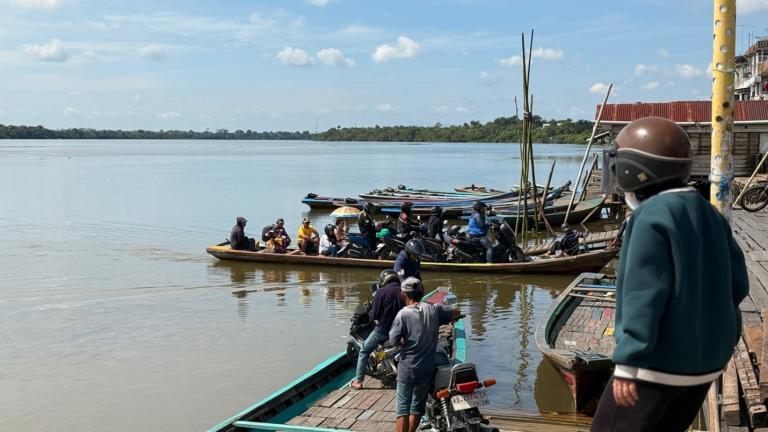
People load onto a boat to cross the Sambas river

Everyday crossings in Sambas
These narrow wooden boats carry people, motorbikes, groceries, and stories across the River. Some wait under umbrellas, some ride in silence, others chat as they balance on the edge. On clear days or under grey skies, this is how communities move - between villages, markets, and health posts. 

Why this moment matters to my research
Access isn’t just about proximity. It's shaped by rivers, boats, wait times, weather, and how many people can squeeze in. This matters when we talk about reaching caregivers or delivering health programs. Fieldwork here reminds me that "barriers" aren't abstract.

What I’m taking away
To design better interventions, it’s not just about identifying gaps in service, but understanding how people navigate those gaps every day. 

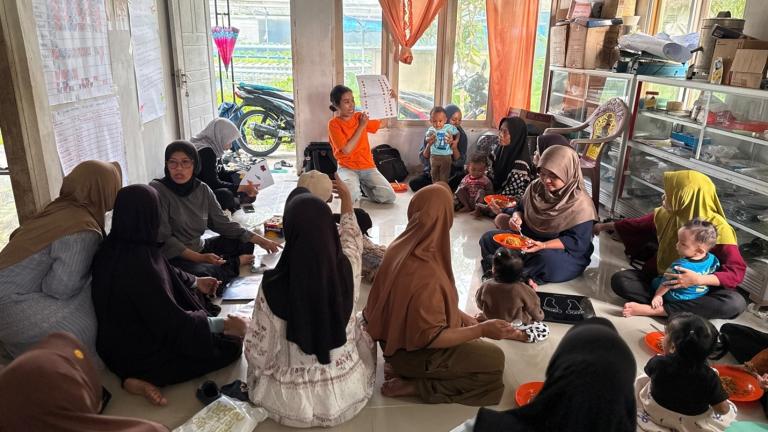
Sari health session in progress

A Pos Gizi DASHAT Session in Progress

We watched a session unfold. Noodles on plastic plates, health education materials in hand, a facilitator doing her best to capture everyone’s attention. Children cried and laughed. Mothers shifted between feeding and listening.

Why this moment matters to my research

This is where the program becomes real. Not in slide decks, but in a crowded room where attention is divided, time is limited, and the stakes are personal.

What I’m taking away

Implementation is embodied. It sits in the way a mother juggles a toddler and a fork, in how a cadre adapts her script mid-sentence, in the pauses, the jokes, the mess. 

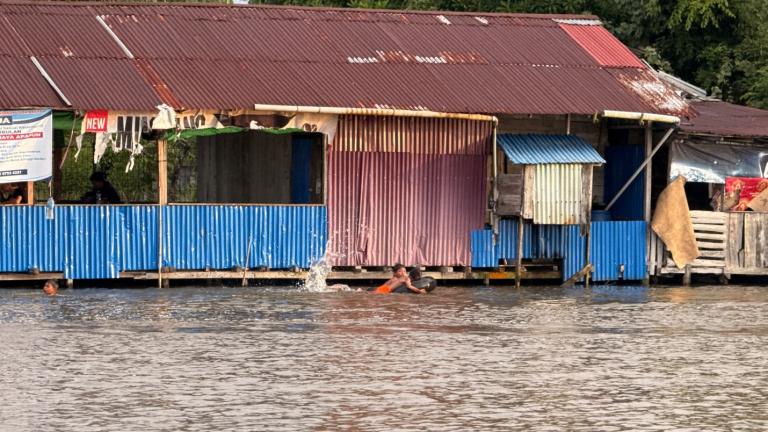
Sari - children swimming in river

Swimming in the River

Two children splash outside a stilt house, the water murky.

Across the river from a health post, children played in water visibly polluted by the settlements upstream. The laughter was real, and so was the contamination.

Why this moment matters to my research

Stunting isn’t just about food. It’s about water, sanitation, exposure. But in places like this, the river is everything; transportation, recreation, necessity.

What I’m taking away

We often frame undernutrition as a household issue. But it’s environmental. Political. Structural. 

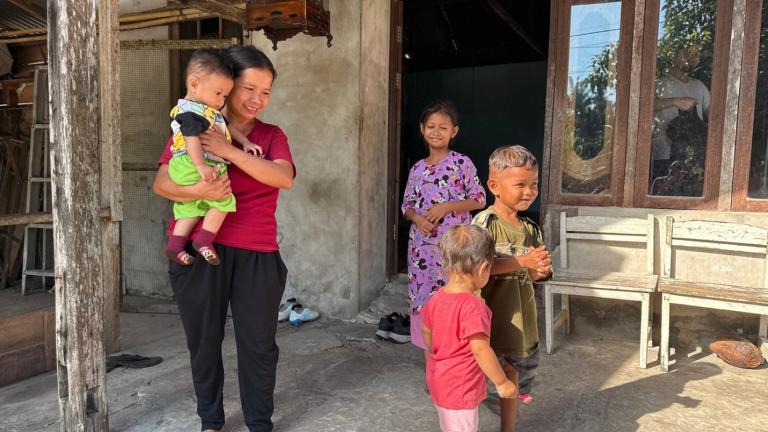
A mother, child and three children outside their door

A Family at the Doorstep

A caregiver stands outside with her baby, surrounded by her children.

She smiled as we waved goodbye. Her older children gathered, barefoot on the cement. They watched us leave -- half curious, half shy.

Why this moment matters to my research

This wasn’t a “beneficiary.” This was a mother raising four children, working within her own rhythms, boundaries, and logic of care.

What I’m taking away

Fieldwork is humbling. You enter someone’s life briefly, and leave with a notebook full of interpretations. But long after the visit ends, life goes on. The project might measure impact. She just wants her kids to grow well.

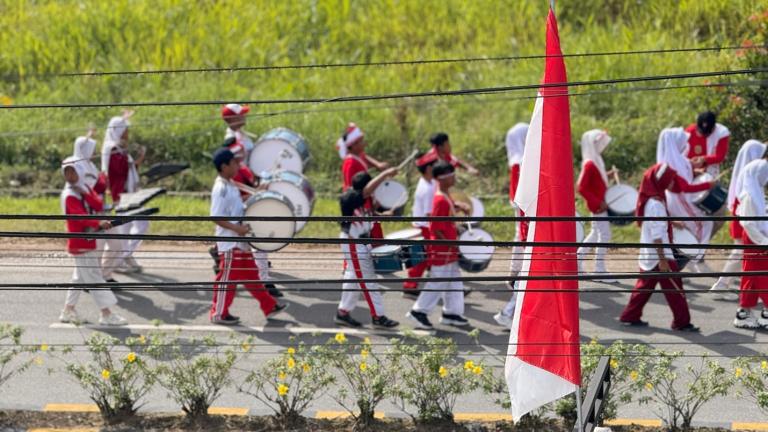
People dressed in white and red march in a parade

Independence Day Parade

Children march down the road in red and white, led by a school drum band.

Flags lined the streets, kids marched in beat. It wasn’t August 17 yet, but the energy had arrived early.

Why this moment matters to my research

I came for a PGD study. But I kept finding evidence of something else; collective identity, pride, joy.

What I’m taking away

Health is also about dignity. Programs work better when they build on what communities already have -- tradition, celebration, a sense of “we.” Sometimes, the best insights came not in interviews, but in parades.

Read more thesis experiences from other students
Back to MMSc-GHD home page
Harvard Medical School
Facebook linkedin instagram youtube

641 Huntington Avenue
Boston, Massachusetts 02115
(617) 432-1707

Footer

  • Accessibility
  • Digital Accessibility​
  • Privacy Policy

User account menu

  • Log in

© 2026 by the President and Fellows of Harvard College