Understanding the barriers and facilitators of using mental health services in Zanmi Lasante facilities in Haiti from 2015 to 2024
This study explores the utilization of mental health services in Zanmi Lasante (ZL) facilities in Haiti, during periods of socio-political violence from 2015 to 2024. Amid increasing instability, the need to understand mental health care patterns of service use has become critical. The research combines a retrospective quantitative analysis of health records and site reports during those years with qualitative interviews involving service users, caregivers and healthcare providers. It aims to identify trends of utilization during specific periods and regarding different factors. Furthermore, it aims to understand the barriers and facilitators influencing service utilization, ultimately informing strategies to improve mental health care delivery in conflict-affected settings.
Photos and reflections on the thesis project
Students submitted photos and reflections as part of their thesis research. All the people in the photos gave permission for their photos to be taken and shared.
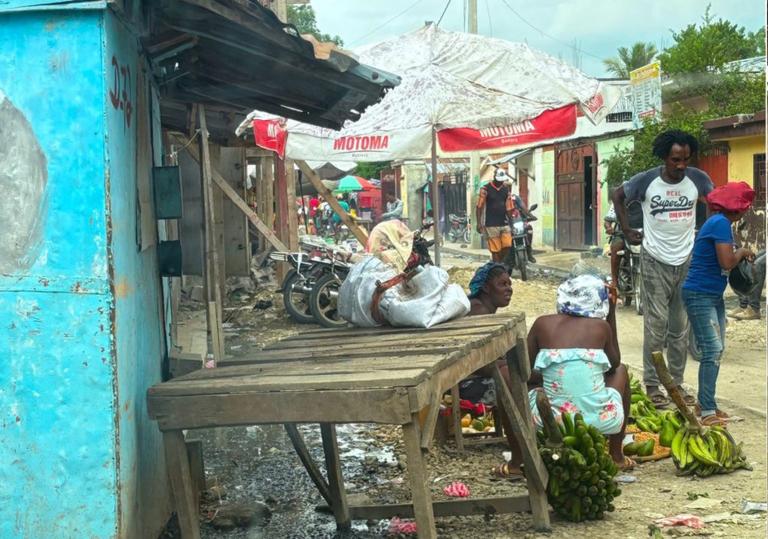
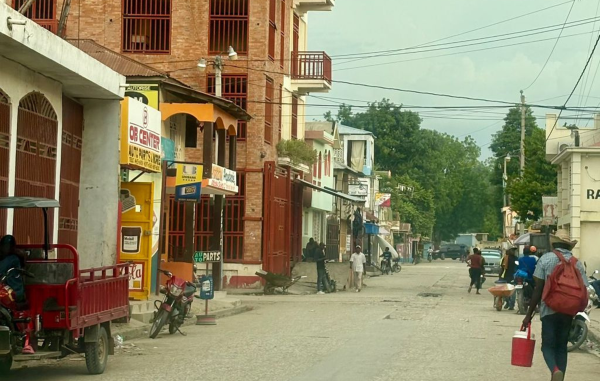
These two photos capture two intertwined realities of my fieldwork sites. Those two photographs, both taken in Hinche, show how one city can embody contrasting worlds: on one side, the bustling streets where people sell what little they have to survive, reflecting deep social and economic precarity; on the other, a relatively quiet, orderly street that creates the illusion of normality amidst hardship. These parallel realities are central to understanding how socio-political violence shapes the daily lives of Haitians and how such contexts impact health-seeking behavior.
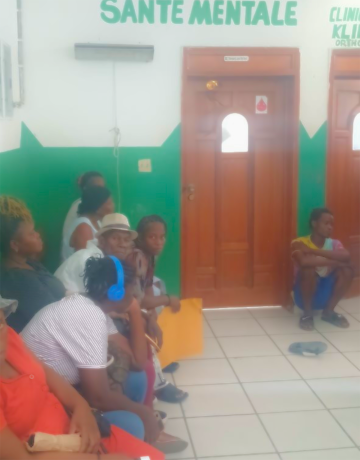
The Clinic
In the waiting area of the Saint-Marc hospital, one of the facilities where my thesis project is based. The crowded benches, the faces of people waiting, sometimes with visible impatience, sometimes with quiet resignation, tell another part of the story. These spaces are where individuals come seeking answers to complex issues, including mental health challenges that are often exacerbated by instability and violence.
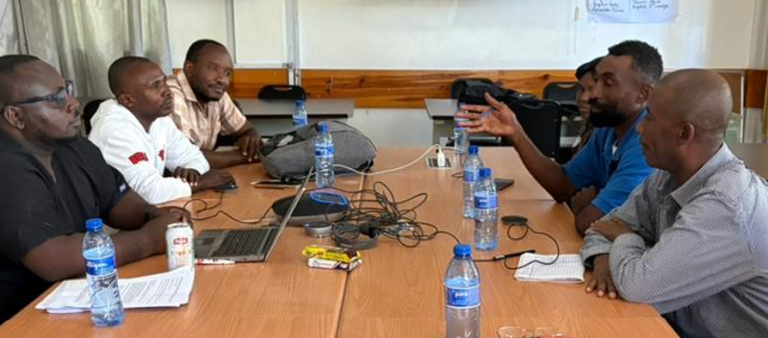
The Conversation
The photo shows a focus group session with community health workers from Zanmi Lasante facilities. They are seated in a bright room around a table , leaning toward one another in discussion. You can almost feel the energy in the room, hands moving mid-conversation, notebooks open, and faces alive with thought and expression.
Honestly, getting everyone together for this session was a small victory. We had to reschedule more than once because of the eruption of sociopolitical violence in mid-November.
What struck me most was how enthusiastic the participants were once they arrived. They were eager to share their experiences, answer questions, and reflect on their role. There was laughter, storytelling, debate, and even moments of silence that said more than words. It made me realize how deeply committed they are to their communities, even during instability. reminded me that resilience is not abstract. It is embodied in people, every day.
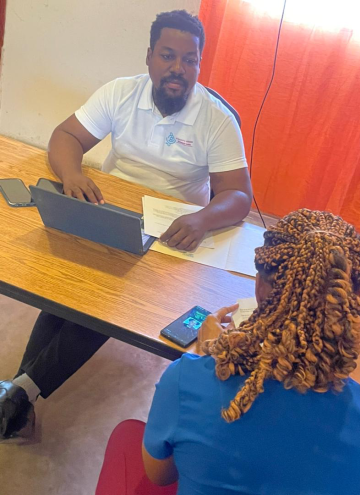
An Interview
The photo shows an interview session with a patient at one of the Zanmi Lasante facilities. My research assistant is sitting beside them, notebook in hand, listening carefully as the patient shares their experience with mental health services and how she deals with her family in that context.
This moment reflects one of the most meaningful aspects of my research: understanding how individuals experience mental health care during periods of instability and violence. Patient interviews are central to this project because they offer personal narratives that statistics alone could never capture. Through these conversations, we learn what barriers exist, what support has made a difference, and how the health system responds under pressure. The photo also highlights the essential work of my research assistant, who has become the bridge between the study design and the lived reality of the participants we engage.
The Analysis
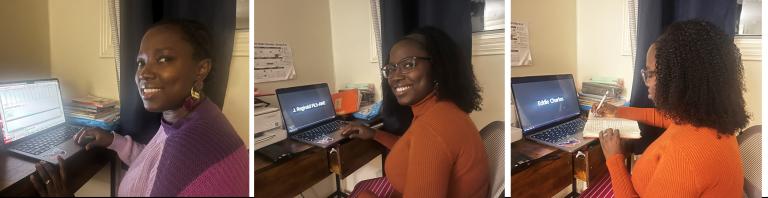
This first picture on the left captures a quiet but decisive moment of my fieldwork: hours spent working on Stata, (learning how to use correctly and from my mistakes) organizing the dataset and carefully planning each quantitative analysis. At this stage, the numbers began to tell a story, patterns, gaps, and trends slowly emerging from months of data collection.
The second picture (center) shows stacks of interview records. This represents the qualitative heart of the project: listening again to participants’ voices, transcribing their words, and engaging deeply with their experiences. The process was time-consuming but grounding. Each transcript added nuance to the numbers and reminded me why this research matters.
Stepping back to reflect on the entire fieldwork process. Listening again to interviews, analysis my quantitative data. This is where analysis truly began to take form, where quantitative and qualitative findings started to speak to each other, and where the thesis gradually became more than a project: it became a coherent narrative.