
Understanding Mental Health Issues Facing Young Women in the Hmong Community: A Qualitative Descriptive Study in Sapa, Vietnam
This study began with a simple observation: many young Hmong women carry emotional pain, but they rarely name it in ways that formal systems would recognize.
Drawing on a qualitative descriptive approach, I conducted in-depth interviews and lived alongside Hmong communities across four villages in Sapa, Vietnam. Rather than asking whether young women experience “depression” or “anxiety,” this study asked how distress is actually lived, spoken about, and carried in everyday life.
What emerged was not the absence of mental health struggles, but a different language for them. Emotional distress appeared through quiet sadness, persistent worry, withdrawal, and silence, often held privately rather than shared openly. These experiences are deeply shaped by gendered expectations, family responsibilities, economic uncertainty, and the tension between personal aspirations and social obligations.
Support, when it exists, rarely comes from formal services. Instead, it is found in relationships, trusted family members, close friends, and, at times, spiritual or ritual practices that offer meaning and relief within a familiar cultural world.
This study suggests that mental health in this context cannot be understood as an individual or purely clinical issue. It is lived within relationships, shaped by structure, and expressed through everyday experience. Responding to it requires not only expanding services, but rethinking what counts as distress, who gets to define it, and what forms of care feel possible.
Photos and reflections on the thesis project
Students submitted photos and reflections as part of their thesis research. All the people in the photos gave permission for their photos to be taken and shared.
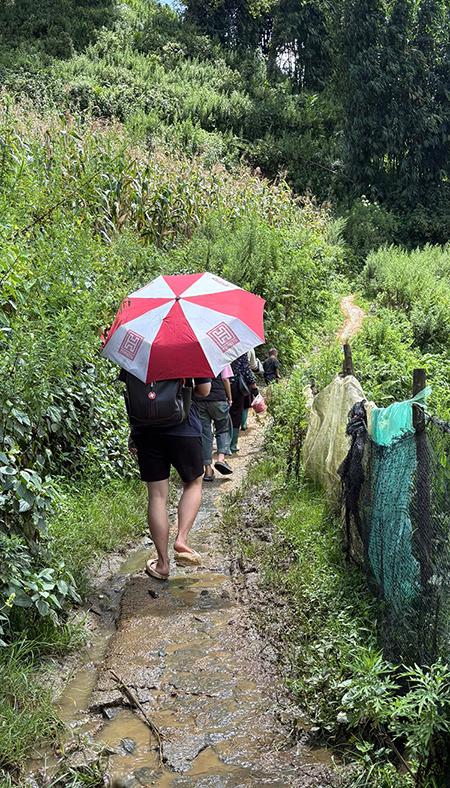
This photo shows my research assistant holding a red-and-white umbrella as we walk together along a muddy mountain path in a rural village. We are all wearing sandals to navigate the slippery, uneven ground, surrounded by cornfields and lush greenery on both sides.
This path leads to the homes of Hmong community members in the highlands where I am conducting ethnographic fieldwork. Reaching their homes on foot is essential for building rapport and understanding the context of their daily lives, which directly supports my research on cultural and social factors influencing mental health among young Hmong women.
Today’s climb reminded me that fieldwork is as much about presence as it is about data. The walk-mud, sun, and all-created space for informal conversations, laughter, and shared observations with my team. These unplanned moments often deepen relationships and open the door to more honest and meaningful exchanges during formal interviews.
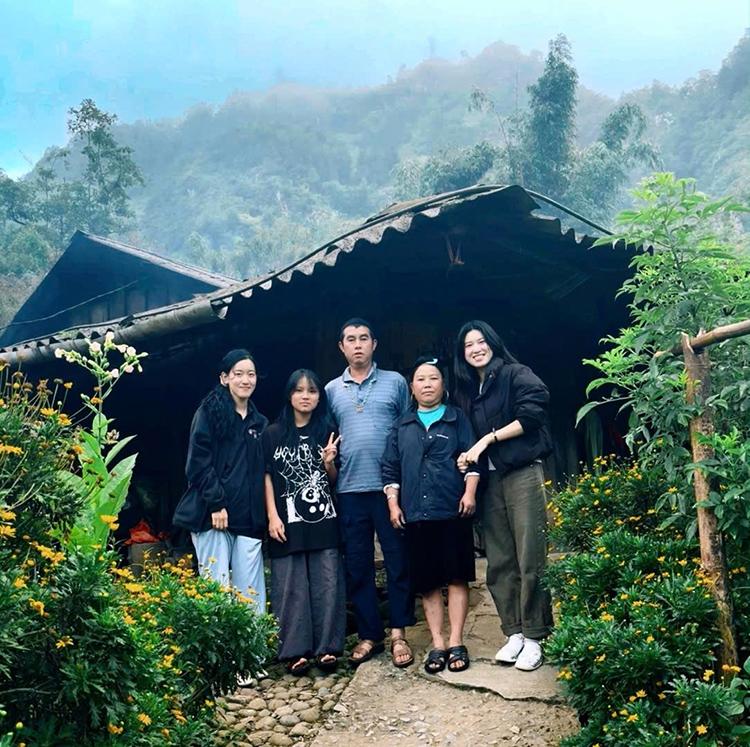
This photo shows me standing with the family of Chu Uncle, a Hmong household in Sin Chai Village, where I lived for three months during my fieldwork in Sapa. Their home is located deep in the mountains, and it became my base throughout my research period.
The photo represents the core of my qualitative research: living with a local Hmong family to understand daily routines, community norms, and the lived experiences of young Hmong women. Staying with Chu’s family allowed me to participate in shared meals, conversations, and cultural practices, which helped me build trust with community members and conduct more grounded, culturally informed interviews.
One thing I’ve been learning is how much emotional labor goes into building genuine relationships in the field. The more time I spent helping with cooking, farming tasks, or simply sitting by the fire in the evenings, the more participants opened up about sensitive topics like early marriage or stress. It reminded me that ethnographic research isn’t just about methods - it’s about showing up consistently as a human being.
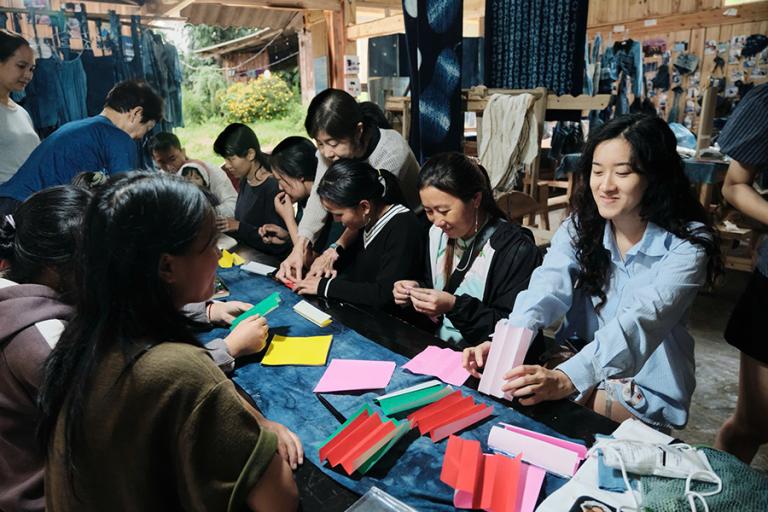
This photo captures a vocational workshop organized in Sin Chai, where artisans from Japan taught Hmong women how to create traditional patterns using indigo dyeing techniques. I am sitting among the local women, participating in the hands-on practice session.
This workshop reflects the intersection of mental health, gender, and economic empowerment - a key dimension of my study. Many young Hmong women shared that having a skill-based livelihood provides a sense of purpose, reduces financial stress, and strengthens their confidence. Observing and joining this session helped me better understand how economic opportunities can indirectly support mental well-being.
A small but memorable moment: while folding dyed fabric, one woman told me, “If I can earn my own money, I feel lighter here,” pointing to her chest. It reinforced a theme appearing across my interviews - emotional relief often comes from having agency, not just emotional support.
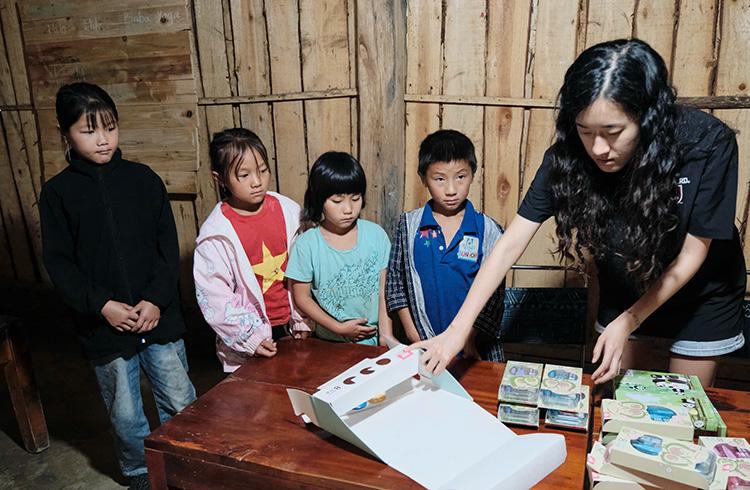
This photo shows me helping Mai - a local community organizer - distribute school supplies to children in Sin Chai Village. The children are lining up to receive learning kits donated by partners and volunteers.
Many families in Sin Chai face financial limitations that affect children’s access to basic educational materials. Understanding these structural constraints has been essential to my research on how socioeconomic stressors shape mental health for young Hmong girls. Participating in community activities like this helped me engage with families and better understand the broader ecosystem surrounding the young women I interview.
Something I’ve been thinking about is how small acts - like giving a child a notebook - connect to much bigger feelings of hope. Several mothers told me that moments like this remind them that people outside still care about their village, which subtly influences how they think about their daughters’ futures.